

Ibn Rushd the King Philosopher
By Dr. Muqtedar Khan
This article was published in the Islamic Horizons in 1998.
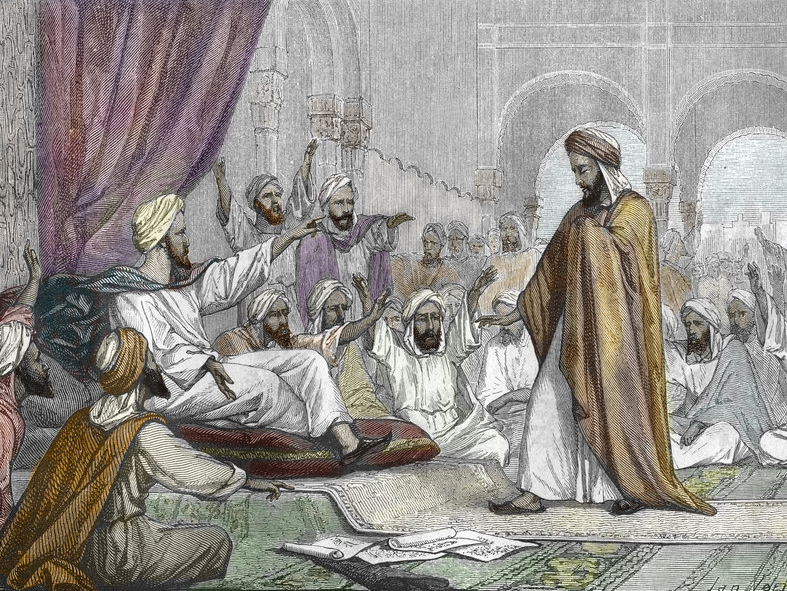
This brief article is dedicated to the memory of Ibn Rushd (1128-1198). On the 800 hundredth anniversary of his death, I would like to remember the contributions of this great Muslim. Abul-Waleed Muhammad Ibn Rushd was born in Cardova, Spain in 520 A.H. (1128 C.E.).
During his life time Ibn Rushd worked as a Qadi (judge) in Morocco and Spain and was for over ten years the Chief Qadi of Cardova. He was also a physician and adviser at the courts of the Moroccan Caliph and the Spanish Caliph.
Ibn Rushd wrote over 87 books on philosophy and over twenty on medicine. He wrote commentaries on Aristotle’s Anima and Politics, on Plato’s Republic and on Farabi’s Logic. While his commentaries made him the most famous philosopher in the West from the 12th to the 17th century, his most original works in philosophy were Fas al-Maqal (The Decisive Treatise), al-Kashf `an Manahij al-Adillah (The Exposition ofthe Methods of Proof) and Tahafut al-Tahafut (The Incoherence of Incoherence). In the first two books he challenges Asharite theology in order to emphasize the harmony of philosophy and religion, or reason and faith. In the third he takes on Al-Ghazali’s attack on philosophy head on and in the process makes his own position on the relation between philosophy and religion clear. He uses this opportunity to also provide an Islamic understanding of Aristotle.
Ibn Rushd, like Al-Kindi, Al-Farabi and Ibn Sina before him, saw no discordance between religion and philosophy. He maintained that both philosophy and religion were capable of leading humanity to truth. Interestingly, unlike other philosophers Ibn Rushd recognized the validity and significance of prophecy. He also believed that shariah derived from prophecy was definitely superior to the nomos (laws)derived from reason. However, Ibn Rushd was also convinced that the philosophers approach to both nature and revealed text was superior to that of the fuqaha (jurists) and the mutkallimoon (theologians).
Ibn Rushd identified three methods to knowledge. The burhan (method of logical demonstration) was the most superior method and in his opinion only the philosopher was capable of employing this approach. The second was jadal (dialectical). Jadal according to Ibn Rushd was the method used by theologians. And finally the art of Khatabah (rhetoric, sophistry and persuasion). This method Ibn Rushd argued was to be used while dealing with the masses. Indeed the theologians were masters of this art, which often prompted Islamic philosophers to use the Greek analogy of sophists for Muslim theologians.
Ibn Rushd represents a unique convergence of philosophy, religion, science and law. For over four decades he was a prominent judge in al-Andalus and was not only a major practitioner of Maliki law but he was also an important scholar of Maliki jurisprudence. As a court physician and the author of the famous text Kulliyat, known and widely used in Western medical schools as Colliget, Ibn Rushd was the preeminent medical practitioner of his time. His impact on the study of medicine was felt for over 500 years. He is well known for his commentaries on Aristotle and for his critique of Neoplatonism of al-Farabi and Ibn Sina. But he is best known for his reconciliation of religion and philosophy, aql (reason) and naql (tradition).
Ibn Rushd used Quranic injunctions to reflect upon and to observe Allah’s signs as an injunction to philosophize. He genuinely believed that the methodology of the theologians was not adequate to elucidate the divine Shariah and in an extremely clever fashion underscored the religious necessity of philosophy. Ibn Rushd’s contribution to reconciling philosophy and religion actually was a deconstruction of the differences between Asharite theologians and ancient Greek philosophers. He was able to show that the elements of Aristotelian and Platonic philosophy that the Asharites deemed unIslamic was indeed within the domain of the freedom of thought allowed by Islamic shariah.
Philosophy, since Ibn Rushd has evolved very much and so has theology. Indeed we are living in an era which is witnessing the emergence of a philosophical tradition explicitly opposed to “reason” (postmodernism). Moreover modern philosophy and its secularized world view make us wonder whether even Ibn Rushd can bridge the gap between religion and modernity today?. One of the unfortunate consequences of the decline of philosophy in the Muslim world has been the stagnation of Islamic sciences.
Deprived of the intellectual challenge from philosophy, Islamic theology has become stunted and indeed in dire need of reexamination. Islamic philosophy had played a major role in the development of Islamic theology and Fiqh. Remember, initially the sources of Islamic Law were, The Quran and the Sunnah alone. But the development of the Usul al-fiqh and the use of ijtihad (independent reasoning) has led tothe recognition that public interest and reason can also contribute tolegislation, particularly in areas on which the original sources (Quranand Sunnah) are silent. This development transpired when Islamic theologians and jurists were forced to respond to challenges posed by rational theologians like the muttazalites and philosophers.
Thus the dialectics between reason and revelation was played out as debates between philosophers and theologians, between Sufis (mystics) and Fuqaha (jurists). The debates between Al-Ghazali and Ibn Rushd, and IbnRushd and Ibn Taymiyyah, are great milestones in the general development of Islamic thought. As inheritors of this great intellectual tradition we are indeed blessed. It is time that we remember the contributions of Ibn Rushd to Islamic thought.
The great Muslim philosopher enriched Islamic discourses through his writings on Law and his debates with the theologians. He also enriched and indeed transformed Christian theology through Aquinas and Jewish theology through Maimonides. We need to revive the spirit of Ibn Rushd to once again inject vitality into Islamic thought. Even though we lament the fact that Ibn Rushd did not have a great impact on Islamic thought and are jealous of the West which has benefited from him so much, we can remember with pride his role in the most fascinating debate between philosophers and theologians that spanned four centuries. This debate remains an integral part of the development of Islamic thought and Ibn Rushd played a central role in it. We conclude by reminding our readers that great scholars like Ibn Rushd are jewels not only in the heritage of Islam but also in the legacy of World civilization. Ibn Rushd may not have been a Philosopher-King but he was indeed a King amongst philosophers.
Dr. Muqtedar Khan is a professor at the University of Delaware and a Senior Fellow at the Center for Global Policy. He is originally from Hyderabad, India and the author of a new book Islam and Good Governance: A Political Philosophy of Ihsan and tweets at @MuqtedarKhan.
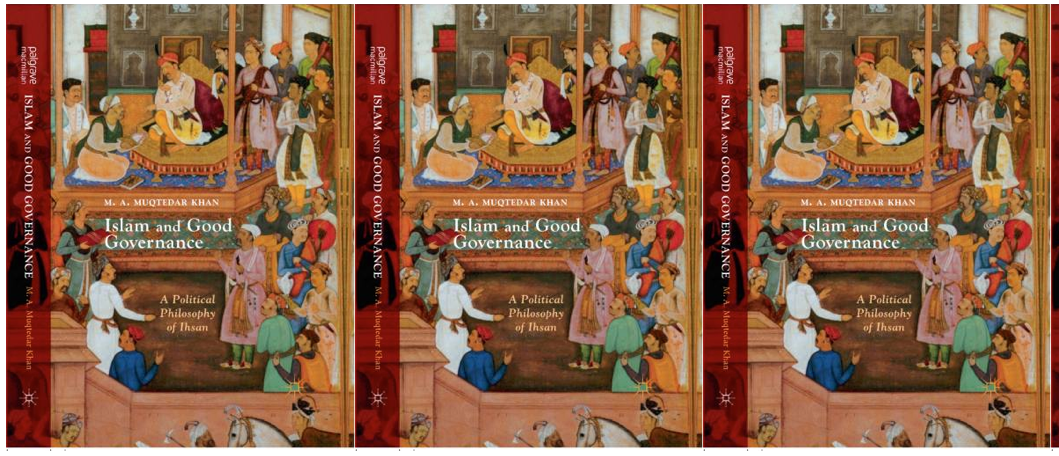
Islam and Good Governance has been selected as one of the Best Political Philosophy Books of All time. Click the Medal below for more details.







Pingback: 5 Islamic Philosophers Every Muslim Must Read « CauseHub
We as Muslim society we need to know about our philosophers , because i am a student of political science and international relation but my teachers teach me is only Greece philosophers and Roman’s , i know about Aristotle , Plato , Max ,Darwin Thomas Hope etc but i feel those theories are not applicable for me cause we believe different thing , even we don’t share any thing so i ask my self how this theories can be applicable for my Society ? so plz help me and told me how i can get more information about Muslim philosophers ..Thank you so much for shearing this wonderful information about my role models.
Pingback: Islamic Philosophers – Judul Situs
Very helpful Thanks a lot professor!
Thanks for this wonderful piece!