Previous Story
The 9/11 Commission Report
Posted On Aug 26 2004
Comment: 0
This was first published as a book chapter in First Impressions: American Muslim Perspectives (Washington DC: American Muslim Taskforce, 2003). Op-Ed versions have appeared in The Daily Times (Pakistan) 08.26.2004, Pakistan Link, 09.04.2004, The Muslim Observer 09.15.2004, and Muslimwakeup.com, 08.24.2004. This article was subsequently republished in the Homeland Protection Professional in January 2005.
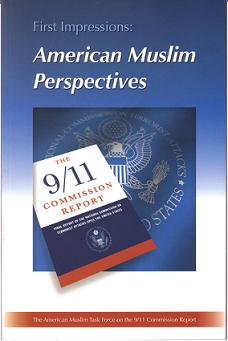 The 585-page report by the bipartisan-independent 9/11commission has been published and is now a best seller.[1] The report, in great detail, confirms what is generally considered as common wisdom in America today. Most of what it reveals is already known and what it conceals is also known. It therefore is really redundant from a knowledge perspective. But it is a potentially powerful political weapon that can be wielded effectively by politicians of every hue. It enjoys the added appeal of being supported by the families of the victims and in that sense has acquired a sacred quality that people in charge may ignore at their own peril.
It also offers nothing new in terms of genuine strategies and recommendations to make America safer; think tanks and experts in the last three years have already recommended much of what it recommends. Its value lies in its summation and accumulation of a large body of facts in one place and will remain a useful reference tool for all who are engaged in the new enterprise of global Counter-terrorism.
First Impressions
The report is comprehensive and its key points are:
1. The attacks of 9/11 were unexpected and unprecedented;
2. The American security establishment was ill prepared to combat such an eventuality. Its security apparatus, including the intelligence community, had not adjusted institutionally to be able to anticipate and pre-empt what the report labels as “the new terrorism”.
3. The report warns that an attack of even greater magnitude is now possible unless America prepares and acts now.
4. It argues that the US needs to reconstitute its security policies and institutions to facilitate coordination of information, rapid decision-making and pre-emptive action on a global scale. The report redefines American “national interests” and recommends preparedness on a global scale.
5. It recommends foreign policy shifts acknowledging the critical linkage between American security and its foreign policy. The report does a disservice to the nation by not examining this linkage in its laborious effort to explain how and why 9/11 happened. Thankfully, the oversight is corrected in its final recommendations.
6. The report systematically downplays the significance of US support for Israel and its foreign policy in the Muslim world.
7. The overriding theme of its operational recommendations is “unity of effort” in all arenas, from intelligence gathering to politics, policy and policing matters.
8. The report repeatedly calls for the US to defend its values overseas. It forgets to remind us that we must also practice our values here and overseas. It lacks an adequate criticism of US policies which undermine democracy in the US and elsewhere.
9. The report says it is not Islam but a small minority of “Islamist terrorists” who constitute a serious threat to America.
10. One problematic aspect of the report is the absence of the input of not only American Muslims but also of established scholars of Islam and the Muslim world. Its analysis of Islamic resurgence, the socio-political condition of the Muslim World and the causes for the emergence of Islamic militancy and groups such as Al Qaeda, are poorly studied.
11. It does not express any misgivings about American Muslims.
The How and Why Report
The report broadly tries to answer two questions — how? And why? It first tries to explain how 9/11 happened and then why it happened. It then seeks to recommend how the US can be successful in its response and why. It provides a great deal of detailed information about how the attacks were planned and executed. This should be an eye-opener to those Muslims who still deny the hand of Bin laden and Al Qaeda in the attacks.
The report makes a distinction between old terrorism and new terrorism without actually providing a satisfactory explanation of what is different.[2] What it does accept is the paradigm shift from the Clinton administration, which treated terrorism as a crime, to the Bush administration that treats it as a war. The report provides useful analysis and suggestions for this new philosophy for combating terrorism. Indeed it is possible that September 11 may fundamentally reconstitute America’s defense doctrines and transform its military capabilities. The report offers many tactical ways to deal with the new invisible enemy.
One problematic aspect of the report is the absence of the input of not only American Muslims but also of established scholars of Islam and the Muslim World. Its analysis of Islamic resurgence, the socio-political condition of the Muslim World, and the causes for the emergence of Islamic militancy and groups such as Al Qaeda are poorly studied. For example John Esposito’s chapter on Bin Laden in his book, Unholy War, provides a more comprehensive understanding of Bin Laden’s personality and his politics than the report[3], which had access to classified data.
If American policy makers continue to ignore the American Muslim perspective and the enormous wealth of understanding that the American scholars of Islam and the Muslim World possess, then they will make serious mistakes in understanding the present challenge.[4] The misunderstanding of the conditions prevalent in the Muslim World will translate into more problematic policies aggravating the situation globally and further compromising American security and interests. American policies will face the danger of being hijacked by policy entrepreneurs and ideologues and lead the country astray.[5]
The report is astonishingly silent on the historical role of US foreign policy in the Muslim World, which many argue contributed to the rise of anti-Americanism in the Muslim World. It was silent on the US role in Afghanistan. We cannot understand how the “Mujahideen” became a “Jihadi” without understanding US policies in the region. This neglect does not serve American interests. If the commission had consulted scholars it would have learned a lot more. Mahmood Mamdani does a better job in his book, Good Muslim, Bad Muslim, than the report on this score.[6]
The report sheds light on the involvement or lack of it of American Muslims in the 9/11 operations. One can take home two conclusions. One, that the community had really very little if not nothing to do with the attacks and therefore the excessive focus on Islam in America and American Muslims by the media and many security agencies is unwarranted. But the report also shows that some Muslims can be very stupid. Imagine allowing the use of a mosque account to transfer funds from overseas to an individual who you hardly know[7]. Hopefully after 9/11, American Muslim institutions will not allow their “fellow Muslim brothers” from abusing their institutions. American Muslims as a community must call for a systematic review and revision of the management of American Muslim institutions and implement real training programs. They must focus on upgrading their legal and security measures, revisit adherence to new post-Patriot Act regulations, accountability mechanism, and oversight functions.
The best and the most useful part of the report is Chapter 12, “What to do: A Global Strategy”[8]. Though not without certain limitations the chapter indicates the commissions open and fair analysis of the problem and its willingness to engage with the challenges posed by 9/11 attacks. The report identifies the threat as “Islamist terrorism” and recommends a series of strategies to counter it. The report argues that Al Qaeda and groups inspired by Al Qaeda and its militant ideology are a threat to the US’ global interests and because they are party motivated by US policies and partly by their radical Islamic ideas that seek to either destroy or convert the US, they leave no option for negotiation for the US[9].
It would have been better if the report had used the word Jihadism rather than Islamist to qualify the militant groups and make a distinction between Islamists and rogue Islamists.[10] The latter runs the danger of throwing a much wider net leading to repression of Islamists seeking socio-political change through peaceful means. The identification of Islamism itself as a potential enemy also runs the danger of alienating and radicalizing all Islamists, who are easily the most powerful and potent force in Muslim politics worldwide. Here again they reveal the dangers of not consulting Muslims and experts of Islam. The commission would have been more enlightened if they had paid a little more attention to a recent book, The Future of Political Islam, by Graham Fuller, a former CIA analyst, which provides a fair analysis of Islamism with a clear concern for long-term US interests[11].
The report must be commended for its courage in pin pointing and surgically defining the threat. It specially states that Islam is not the threat. The report expresses concern with the condition of politics within Saudi Arabia, Pakistan and Afghanistan[12] [pp.367-374]. I fully endorse the reports analysis of Saudi Arabia and Afghanistan but regret its recommendation on Pakistan that appear more like US policy towards Parvez Musharraf than Pakistan. While it is interesting that the report does not discuss Iran, Syria or Sudan in the context of potential sanctuaries for anti-American Jihadi groups, the report commits a gross error by not including Iraq in its short list as a potential sanctuary for Jihadis. An instable Iraq may well become the launching pad for anti-American Jihadis. Perhaps the commission chose not to discuss Iraq in this context to avoid underscoring the stark contradictions in the policies it recommends and the policies that the Bush administration has articulated and executed in Iraq.
The report advocates soft and tough, diplomatic and militaristic strategies to combat terrorist organizations in the Muslim World. They are practical and wise and the US government will do well to implement several of them. The strategies sensitivity to the absence of democracy in the Muslim World and the socio-political plight of ordinary Muslims deserves special mention. Its insistence that the US must eschew compromising democracy in the interest of short term strategic gains is noteworthy but it must also be pointed it that their own recommendations vis-à-vis Pakistan violate this principle.
Recommendations for American Muslims
This is an important report and will have a significant impact on US policy. The report should not be taken lightly. I recommend the American Muslim community to:
Start a public dialogue within the American Muslim Community to understand what it reveals and recommends. Leaders should ensure that irresponsible responses triggered by “conspiratorial mind frames” are discouraged and confronted immediately. Indeed a fatwa, by the North American Fiqh Council, forbidding Muslims to opine on it without reading it first may be very helpful.
American Muslims must eschew getting entangled in disputes stemming from denials or semantic politics and must focus on the substantive aspects of policy. If Muslims react to this report by rejecting it, ridiculing it or engaging it without paramount concern for American security, then they will have only themselves to blame if their marginalization from policy making continues. In case we are not aware, the primary objective of the American foreign policy establishment is to work towards the security and interests of the US, not of Palestine or Iraq or Pakistan. American Muslims must never forget that and also ensure that American policy makers also never forget that. Special interests are antithetical to broad national interests.
American Muslims must put together a conference of its leaders and issue a comprehensive resolution on how American Muslim organizations and individual citizens can work with the authorities to realize many of the recommendations of the report to make America safe. This should be the primary purpose, criticism and suggestions to include the American Muslim perspective must come in the form of the above-described Resolution of Cooperation.
American Muslims must think clearly and dispassionately about the reports definition of the threat without rushing to judgment. It is in the interest of American Muslims to ensure that everyone understands that the threat is not Islam but Muslims who are determined to use terror as a weapon against America and American interests to pursue political ends. If American Muslims see themselves as part of America and American interests then indeed those who wish to undermine America are also our enemies. American Muslims can be secure and thrive only if American is safe and thriving.
By ignoring American Muslim perspective the 9/11 commission report actually opens a window of opportunity for American Muslims to capitalize on this glaring deficiency and ride into the policy process on its back. This is a God sent opportunity; I hope American Muslims will not squander it.
Final Thought
The report offers an excellent opportunity for American Muslims to participate, rejuvenate and expand the debate on America’s continuing response to the 9/11 attacks. It gives them an avenue with which they can join other Americans in demanding accountability from the government with regards to its security and foreign policy. This is also a window in to the nature of America in the near future. American Muslim community can now develop anticipatory strategies to adjust to unfolding realities. A constructive response will secure the community and strengthen its bond with the rest of the nation.
[1] This analysis is based on the report of The National Commission on Terrorist Attacks Upon the United States as posted on the World Wide Web at http://www.9-11commission.gov/report/911Report.pdf.
[2] See pp. 71-73 of the report.
[3] See John L. Esposito, Unholy War: Terror in the Name of Islam (New York: Oxford University Press, 2002), pp. 3-26.
[4] For an analysis what American Muslims can potentially contribute to the war on terror, see M. A. Muqtedar Khan, “American Muslims as Allies in and the War on Terror,” in Adam Garfinkle (Ed.) A Practical Guide to Winning the War on Terrorism (Stanford, California: Hoover National Security Forum, October 2004), pp. 117-132. Also see Imad-ad-Deen Ahmed, “Islam Demands a Muslim response to the Terror of September 11,” Middle East Affairs Journal, 7, 2-3 (Summer0Fall 2001). The article is available on the World Wide Web at : http://www.minaret.org/response%20to%20terror.pdf.
[5] To understand the politics of policymaking and the role of policy makers, academics and policy entrepreneurs see M. A. Muqtedar Khan, “US Foreign Policy and Political Islam: Interests, Ideas and Ideology ”, Security Dialogue, 29, 4, (Dec. 1998), pp. 449.462. Also see M. A. Muqtedar Khan, “Policy Entrepreneurs: The Third Dimension of American Foreign Policy Culture,” Middle East Policy, (September 1997), pp. 140-154.
[6] See Mahmood Mamdani, Good Muslim, Bad Muslim: America, the Cold War, and the Roots of Terror (New York: Pantheon Book, 2004).
[7] See pp. 215-220 of the report.
[8] See pp.361-398 of the report.
[9] See pp.361-363 of the report.
[10] For an understanding of the distinction between Islamists and rogue Islamists see M. A. Muqtedar Khan, “Radical Islam, Liberal Islam,” Current History, Vol. 102, No: 668 (December, 2003), pp. 417-421.
[11] See Graham Fuller, The Future of Political Islam (Boulder, Colorado: Palgrave Macmillan, 2003).
[12] See pp.367-374 of the report.