


Previous Story
Islam, Hinduism and Truth
Posted On Jan 12 2014
India Must Develop Indigenous Basis for Politics
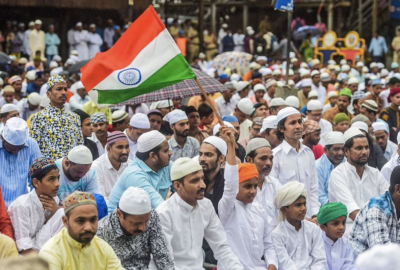
The recent communal violence in India draws attention to two significant problems that are undermining India’s greatness. The first problem is the growing animus between the followers of two of the world’s great religions – Islam and Hinduism — both with long histories of tolerance and pluralism. The second problem is the implication of India’s national and local governments in this growing tension between advocates of Islamic and Hindu identities. The two problems together strain social seams by creating deep fault lines on the basis of religious identity and also erode national consensus about the secular foundations of India’s polity.
India as a nation cannot fulfill its promise until its two most important socio-cultural pillars, Islam and Hinduism, work in tandem, developing a relationship not just of tolerance, but also of mutual appreciation and respect. Many of India’s contemporary thinkers are still working with the euro-centric conception of nationalism and democracy. They are still trying to import European pathways to modernity by premising democracy on a secularism that seeks to reduce the role of religion in the public sphere. It is inevitable that this model will fail in a society where religion and the connection with the spiritual realm is so vital a part of day-to-day existence.
India wakes up everyday to the soul-searching call for Muslim prayers and the soul soothing melodies of Hindu bhajans. In a society such as India’s, where the infinite and the immediate, the spiritual and the mundane, the exotic and the ordinary, are inextricably entwined, European notions of secularism based on crass materialism and a morbid aversion for spirituality cannot provide a basis for social unity and political purpose. India needs its own, indigenous, homegrown socio-political discourse that accommodates rather than excludes all its vital elements, especially the widespread religious impulse that is so characteristic of this nation of temples and mosques of pirs and pundits.
We need to advance a discourse that gives due regard to religion and traditions. This does not mean that we accept and accommodate the angry and hate filled expressions of religiosity as witnessed by the intolerant ranting of an Imam Bukhari or a Bal Thakery. What we need is to revive the authentic values that have made these two faiths so large in their following and so immense in their accumulation of traditional wisdom.
Mutual respect and tolerance can come only from the knowledge and appreciation of the cardinal values that constitutes the other. It is only through intimate knowledge of the other that we can discover that transcendent commonality that underpins all great religions. And in gaining this awareness, we can inculcate an enlightened recognition, appreciation and even union with the other. I believe that India can become great only through a recognition and appreciation of its traditions and not through marginalization of its fundamental values in exchange for European style nationalism or secularism.
Muhammad and Dharmraj
There are those whom Allah has guided,
so follow their guidance (Quran 6:90).
I wish to contribute to this discourse that will build a civilizational bridge between Islam and Hinduism by sharing what I as a Muslim have found so admirable about Hindu traditions. I must alert the reader to the fact that as a Muslim my perceptions of Hinduism are through Islamic lenses. I do not make any claims to any kind of transcendent objectivity. Only imposters, liars and simpletons make claims of objectivity.
One of the things that I admire most about Prophet Muhammad (pbuh) is the manner in which he conducted himself before he declared his Prophethood. Muhammad was known and admired for his honesty and truthfulness not just in Mecca but also among other tribes of Arabia. His personal integrity and his passion for truth earned him the Arabic title Al-Amin, meaning the truthful. This quality of his served him well when he declared that he was the messenger of God. For me Muhammad (pbuh) and Truth are inseparable.
One summer I read the Mahabharat. It is an engrossing and wonderfully exciting epic full of parables and personalities that enlighten as well as entertain. When I encountered the oldest brother of the Pandavas, Yudhister, also known as Dharmraj, I was immediately struck by the similarity between Muhammad (pbuh) and Dharmraj. Both embodied truth in their respective traditions. And the more I read about Dharmraj and what he stood for, the more I was reminded of the Quranic verse which suggests that Islam is also a reminder of the knowledge and values that have already been revealed to humanity (Quran 3:58, 7:69, 12:104, 15:6). I realized that Dharmraj and Muhammad (pbuh) must surely have shared antecedents.
Since then I have always had an enduring respect for Dharmraj. I also rather like the name itself that unites religion and politics. The word Dharm simultaneously implies faith as well as duty, and in the name Dharmraj, faith and its correlative duties are united with the idea of the sovereign. Dharmraj is indeed an embodiment of the Islamic idea of the Khalifah, in whose persona faith and duty, servitude and sovereignty is also united.
This article does not have an end because I am hoping that it is the beginning of a discourse.



After reading Radanath Swami’s book “My journey home” as a Muslim I fell ilove with the beauty of Hinduism. The simplicity of radanath and his humily and respect for all religions, including Islam and Mohamen (PBUH)led me wonder why Imaams and the |Muslims in general are so ignorant of other religions. In the Cape, the evidence of the Hindu ethic of sacrifice and sharing which is also part of the Islamic doctrine, is so obvious. The cultural practices of Muslims and Hindus are so similar – what is needed is the conceptual underdtanding that we have one source or origin – the Divine consciousness.
Honorable Sir,
I appreciate your interest in inter-cultural studies with special reference to theistic cultures. specifically your advise that,”Mutual respect and tolerance can come only from the knowledge and appreciation of the cardinal values that constitutes the other. It is only through intimate knowledge of the other that we can discover that transcendent commonality that underpins all great religions. And in gaining this awareness, we can inculcate an enlightened recognition, appreciation and even union with the other.” is quite worthwhile. Incidentally your belief i.e. “I believe that India can become great only through a recognition and appreciation of its traditions and not through marginalization of its fundamental values in exchange for European style nationalism or secularism.” has proved to be true by virtue of winning the general elections by the right wing party. as advised by you, this is the high time for the Muslim thinkers to undertake comparative religious studies to find common ground in between all the divine religious teachings. this the only way to defy prejudicial thinking which creates hate among the believers of both the religions.
Islam and Muslims has remain the only religion that has extensive knowledge about other faiths most especially Christian faith and also the only religion that will forever uphold the legacy and covenant of one unique God prophesied by all prophet including Jesus ( not idea of trinity by Paul) . Haven said all this the only way to leave in peace globally is to respect the believe of others because Allah said if it pleases him he would have made all of us belong to one religion. It is a laid down plan of God, remember God created hell and paradise.
I chanced upon this site while searching for more information on General Al Sissi who claimed that a second ijtihad is overdue, where all the anachronistic elements in Islam has to be reviewed and revised. This is a bold move. As a Hindu I respect Islam and Prophet Muhammed (pbuh). But trying to find a common platfom that will emphasise convergence of theological and philosophical viewpoints of both the religions is an uphill task.
But I find great promise in this site and hope to learn from you.
Great article, exactly what I wanted tto find.
What a wonderful notion, Sir. Unity will only come from truth and truth will only come from knowledge.