Previous Story
Middle East Crisis: Is the U.S. Part of the Problem
Posted On Aug 01 2006
Comment: 0
This article was published in The Daily Star [Lebanon, 07.31.06],
Al Ahram [Egypt: ], The Daily Times [08.06.2006], The Middle East Online [07.31.06], Alarab Online [07.28.06], Aljazeerah [07.28.06], AltMuslim [07.27.06], The News Journal [07.20.06] OpEdNews[07.27.06], The American Muslim [07.29.06], Naseeb [07.28.06], Pakistan Link [08.06.2006].
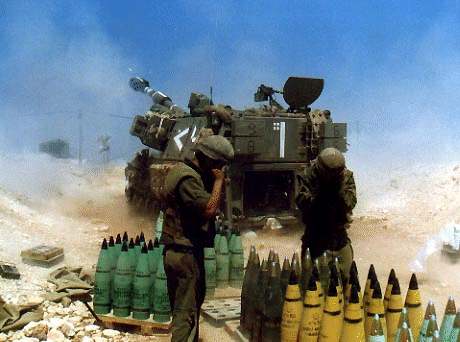 We are presently witnessing in Lebanon, the third humanitarian disaster in which President Bush has had a direct or indirect hand. In Iraq over 50,000 are dead and dying thanks to President Bush’s decision to invade and occupy it without the number of troops necessary to secure the country.
In New Orleans, the administrations’ incompetent preparation and slow response exacerbated the humanitarian crisis. And now hundreds of innocent people are dying in a war in Lebanon that could be stopped by the international community if it was not handcuffed by the US President Bush is determined to allow Israel enough time to devastate Lebanon while it seeks to destroy Hezbollah. We may recall that Israel failed to undermine a much weaker Hezbollah even after 18 years of warfare and occupation of southern Lebanon [1982-2000]. Why do we expect success now?
The US has so far achieved only two things in the two weeks since the conflict in Lebanon began, indeed in the month since the kidnapping of an Israeli soldier prompted Israel to unleash its ruthless war machine.
One, it has acted to ensure that no effort by the international community would succeed in stopping the mayhem in Lebanon. Three times the US has subverted the processes of peace, at the U.N., at the G-8 summit and at the Rome conference, where it was apparent that if it was not for Tony, “the poodle’, Blair, the US would have been completely isolated from the rest of the humanity on this issue.
Two, even during the conflict, instead of working towards peace, we are arming one side with rockets and big powerful bombs which, in the words of the Lebanese Prime Minister, are “cutting his country to pieces.” We are even smuggling these weapons through Britain, somewhat like Iran, smuggling weapons to Hezbollah via Syria. Unlike Syria however, Britain is protesting.
The administration claims that the Rome conference helped build a consensus for an international force to prevent future crisis. For those of us who are familiar with the history of the conflict, we know that it was only because of Israeli and American opposition that there is no real international force already in the area capable of policing the borders and keeping all parties peaceful. What Secretary Rice means by consensus is that finally the US has agreed with the rest of the world on one issue involving Israel.
This strategy of American foreign policy to arm, encourage and support extended and open-ended Israeli military action, I am convinced will fail miserably in realizing its goals. By the time Israeli’s finish in Lebanon it will be a pile of debris with perhaps nearly a thousand innocent civilians dead and over a million homeless and displaced. All other major US goals in the region – democracy promotion, support for moderates, winning hearts and minds, undermining support for radicalism – will also be buried under the debris.
Hezbollah fighters would have been dispersed all over the region, and will be regrouping to fight another day with more men, more support [thanks to elevated levels of anti-American and Anti-Israeli sentiments across the Middle East], and perhaps more deadlier weapons. They will also be more confident and experienced after their current showing. From their performance it is apparent that they are the best fighting force the Arabs have produced in a long time. Perhaps they will conquer Saudi Arabia and Jordan just for fun, while they regroup. The two monarchies probably fear something of that nature and are therefore huddling so closely with the US since this fight began.
I see no light at the end of the tunnel except wishful thinking that Hezbollah will be destroyed and the rest of the world will send their soldiers to defend Israel. It is like the neocon pipe dream of Americans being received as liberators by Iraqis. After seeing the current form of Hezbollah, I will be surprised if any country will volunteer its forces. If President Bush decides to send our troops, the party will move from Iraq to Lebanon. For Al Qaeda and the Jihadis, it will be like a ‘buy one get one free deal’ [US and Israel together in the same fight].
The US will not talk with Syria or Iran because they are “part of the problem”. From the steps taken so far, it is not clear to me if the US foreign policy is really a part of the solution.
Remember the last time when Israel raped Lebanon, Hezbollah was born. It is scary to imagine what the current molestation will yield. American foreign policy is in wrong hands and is heading in the wrong direction. It is not in the interest of global peace, not good for America’s many interests in the Middle East and will not make Israel safer.
What is true for Spiderman is also true for the US – with great power comes great responsibility. As the sole superpower it is the US’ responsibility to maintain the global order and nurture the international system, not become a destabilizing force. American foreign policy is in a way a global public good and by acting in a highly partisan and short sighted fashion in the current Arab-Israeli conflict we are abdicating our status as a global leader.