Previous Story
Indian Muslims in the Age of Muslim Uprisings
Posted On May 12 2015
Comment: 0
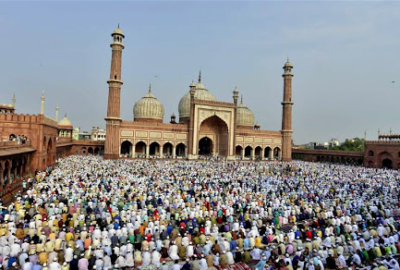
Muslim lands and Muslim communities are in a state of violent and intense political transformations across the Muslim heartland. States are destabilized, national identities are being deconstructed, sectarian and ideological fault lines are getting exacerbated and radicalism, extremism and state oppression is escalating. In this ocean of despair, one finds the Indian Muslim community, an island of calm moderation. Its not a small island either, it is a pretty big chunk. Indian Muslims are about 180 million and constitute nearly 15 percent of the Indian population. If Indian Muslims of today were an independent country, they would be the fifth or sixth most populated country in the world.
Lagging Behind
India is growing, but it is leaving behind its largest minority. India’s economy has done extraordinarily well in the past 20 years, but Muslims not only enjoy a lesser share of these gains, their relative economic condition has suffered significantly compared to everyone else, in spite of spectacular national growth. It should be obvious to anyone who looks at macro indicators that Indian Muslims will constitute a bigger and bigger share of the population while simultaneously holding a smaller and smaller share of the economy.
The publication of the Sachar Commission Report in late 2006, and subsequent surveys, confirmed what many had feared or suspected for a long time: That Indian Muslims were lagging behind the rest of the country on nearly all indicators of development, income, education, representation in state institutions and in government.
Perceptions were now an unquestionable reality. The economic and developmental boom that India had experienced since the 1990s had bypassed the Indian Muslim community. Many Muslims who were part of the educated middle class and had benefitted from family members working in the Gulf were forced to acknowledge that while their personal circumstances may be tolerable, the over all economic condition of Indian Muslims was deplorable.
In addition to lagging behind in the economic sphere, Muslims are also falling behind in their share of the national political pie. The victory of BJP, a Hindu nationalist party with extremely hostile attitude towards religious minorities, and Narender Modi, their national leader as PM, has emboldened the many Hindu extremist groups that now act freely.
Minorities are harassed on a regular basis, violence and forced conversions are now frequent, and enforcement of Hindu dietary laws on the rest of the nation is the new fad of the nation. This trend cannot promise stability and Muslim moderation for an extended period. There is a limit to the extent that disenfranchisement, marginalization and harassment of a large minority can be sustained without causing irreparable damage to the body politic.
Change in Outlook
The Muslim political mindset, too, has been influenced significantly by these developments. The Sachar report by highlighting the state of underdevelopment of the Muslim community has re-prioritized Muslim political goals. Symbolic and identity issues such as the restoration of the Babri Mosque, which was destroyed by Hindu extremists, support for Urdu the language of a large number of Indian Muslims and Muslim Personal Law protection do not resonate as much with Muslims as jobs, education and political participation. Development and not identity has become the more important goal across the spectrum. In the last two-to-three decades the Indian Muslim community has invested heavily in education as this is evidenced by the emergence of many minority professional colleges, especially in the South.
There is a growing awareness among the younger Muslim elite that they are being left behind by a rapidly developing and advancing India, and the negligence of the Indian government towards Muslims means that they must fend for themselves. This sensibility is affecting how Indian Muslims are thinking about mainstream political parties and also explains the emergence of some of the new Muslim political parties such as the Welfare Party modeled on Turkey’s own AKP. Both old and new Muslim parties from the AIMIM in Hyderabad to the Welfare Party increasingly are framing their political goals in the context of material and economic underdevelopment of Muslims rather than in religious terms.
Tipping Point
India is growing and there is enormous wealth available both to the state as well as the civil society, and if good will prevails, a fraction of it can be used to correct the negative trajectory of Muslim reality in India. The state can not only provide the resources to jump-start Muslim development, but it can also do more to protect them from extremist movements acting on prejudice.
Muslims, too, are acting sensibly at the moment, maintaining moderation and trying to move away from constructivist politics based on identity to rational politics based on materialism. While the former can exacerbate identity politics, the latter can align rival and diverse groups in pursuit of wealth and prosperity.
But I fear that if the current government of Narendra Modi allows radical groups to unleash violence and intolerance towards religious minorities without taking strong measure to restore law and order, we might reach a tipping point. A tipping point where Muslims will be forced to accept a subordinate status, combined with various levels of routinized and institutionalized discrimination — or that the tipping point would trigger a nationwide movement either like the Arab uprising, or the more dangerous ISIS like rebellion. We are not there yet.
Terrorism is globalizing but it has not engulfed India in the kind of violence that Pakistan and Iraq suffer. ISIS has no appeal for Indian Muslims. India’s growth and the hope of trickle down is also stemming the possibility of an uprising.
The tipping point is quite far, but I fear that the window of opportunity to address the Muslim question in India is shrinking. I hope commonsense prevails and that this government, which made promises of good and inclusive governance, will ensure that we never reach that dreaded tipping point.