


Previous Story
Two theories of Ijtihad
Posted On Mar 21 2006
This article is syndicated jointly by the Common Ground News Service (CGNews) and United Press International (UPI). The article has been published by ArabOnline [03.22.06], World Peace Herald[03.22.06], The Washington Times [03.22.06], Naseeb, [03.30.3006] and AltMuslim [03.28.06].
As tensions between the Muslim and Western worlds continue to grow, there is one largely overlooked area of activity that may play a role in building bridges: ijtihad. While ijtihad can be a tool for understanding Islamic principles in a way that fits the needs and challenges of individuals and societies, there is no universal agreement on its proper role.
The Islamic tradition has two conceptions of ijtihad. One is a very narrow, legalistic notion of it as a process of juristic reasoning employed to determine the permissibility of an action when primary sources, namely the Koran and Sunnah (Tradition of the Prophet), are silent and earlier scholars of shari’a (Islamic law) had not ruled on the matter. For those who hold this view of ijtihad, who can perform ijtihad is often more important than the need for ijtihad.
In reality, this view is designed to stifle independent thought among Muslims and to confine the right to understand and explain Islam to Muslim jurists. It is also opposed to reasoning, because it essentially says that reason shall be employed only when the texts are silent and no medieval scholar has addressed the issue under scrutiny. Reason, according to this viewpoint, is the last resort for understanding the will of God. For those who hold this view, opening the doors of ijtihad would make no difference, since their very conception of it is impoverished and limited.
The second view, often espoused by non-jurists and particularly by those who advocate some form of Islamic modernism and liberalism, envisions ijtihad more broadly. For modernist Muslims — and I believe that Islamic modernism deeply influences all “moderate” Muslim thinking — ijtihad is about freedom of thought, rational thinking and the quest for truth through an epistemology covering science, rationalism, human experience, critical thinking and so on.
When modernist Muslims claim that the door of ijtihad has been closed, they are lamenting the loss of the spirit of inquiry that was so spectacularly demonstrated by classical Islamic civilization at its peak. They are, in a sense, nostalgic for Ibn Sina’ (Avicenna) and Ibn Rushd (Averroes), for al-Farabi, al-Biruni and al-Haytham — scientists, philosophers and jurists of Islam’s “Golden Age”. Thus, modernist Muslims see ijtihad as the spirit of inquiry and desire for all forms of knowledge, not just religious and juristic, that needs to be revived to revitalize and restore Islamic civilization.
As long as a majority of Muslims equates Islam with shari’a, Islamic scholarship with fiqh (jurisprudence) and real knowledge with juristic knowledge, ijtihad will remain a limited jurisprudential tool and closed minds will never open. Islamic modernists have been trying, since the time of Sir Syed Ahmad Khan, the great Muslim reformer of the 19th century, to re-instill a sense of the value of knowledge and an appreciation for science and philosophical inquiry. Yet, as a Muslim, I acknowledge that there is no research institution worthy of recognition in this way in the entire Muslim world.
Muslims must go back and read Ibn Rushd (Fasl al-Maqaal, The Decisive Treatise), and learn how he bridged science and religion, in order to understand that Islam has nothing to fear from reason and so to open their hearts and minds to rational thought. This is the goal that Ibn Khaldun, the great 14th century Arab historian and philosopher, would have called the “engine of civilization.” Modernist Muslims subscribe to and advocate this spirit of Islam.
Islamic reformation can be understood in two different ways. It can mean the reform of society to bring it back to what have been considered Islamic norms and values: most Islamic and Islamist reformers are pursuing this type of reform. The other reform strategy is to question the existing understanding of Islam and seek to articulate a reformed understanding of Islam: this is where Islamic modernists and rationalists have always plied their trade.
Here, ijtihad is employed as an instrument to critique prevalent understanding and articulate a more compassionate, more modern and, perhaps, even a more liberal understanding (which some would call the truly-traditional understanding). The rethinking of Islam vis-à-vis democracy is an area in which Islamic reformist thinking is taking place.
In my opinion, Muslims can modernize without de-Islamizing or de-traditionalizing. India and Japan have shown that societies can modernize without losing their traditional cultures. Muslim societies today have to distinguish between Islam and culture, retain their Islamic essence and reform dysfunctional cultural habits that hinder development, progress, equality and prosperity.
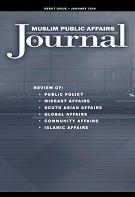
Muslim Public Affairs Journal
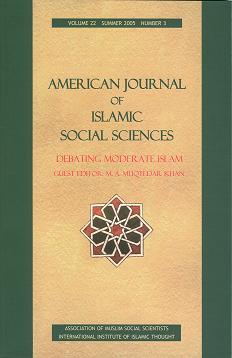
Special Issue:
Debating Moderate Islam
Without holding fast to revelation, Muslims will lose their connection with the divine, which would cause life to lose meaning and purpose for many. The challenge for Muslims today is to latch on to the currents of democracy, modernity and globalization without cutting the umbilical cord to the heavens. I believe that we can do it. American Muslims are demonstrating this in their lives.
When it comes to the modern practice of ijtihad, American Muslims are miles ahead of other Muslim communities. Not only are there a large number of scholars pushing for ijtihad in the U.S., but there are also national organizations and prominent Islamic centers that are, in principle, willing to put initiatives advanced by ijtihad into practice.
An excellent practical example of this is the adoption of guidelines for women-friendly mosques by many Islamic centers. An outstanding theoretical example is the now widespread acceptance in the U.S., and to some extent in Europe, of the idea of Fiqh al Aqliyaat (minority jurisprudence), which is the idea that Muslims who live as minorities need to revisit and rearticulate Islamic legal positions, keeping in mind their minority status. We can see the product of American ijtihad in the progressive role that women play in the American-Muslim community and in Islamic scholarship. Another important indicator is the absence of embedded radicalism in American Islam and the enormous appetite that American Muslims and their organizations express for democracy, civil rights, pluralism and civic engagement.
Thus, a broad vision of ijtihad ensures that Islam and Muslim communities continue to reform in positive ways without losing the connection to Divine revelation and traditional culture. Muslims must continue to embrace this spirit of inquiry and desire for all forms of knowledge in order to revitalize and restore Islamic civilization.




Pingback: Questioning the ‘ISIS Brand’ of Islam | Amar bail