Previous Story
Prospects for Peace: Palestinian Leadership After Arafat
Posted On Nov 14 2004
Comment: 0
The article was commissioned by San Diego Union Tribune [November 14th, 2004]. A shorter version of this article was also published in The Detroit News [November 17, 2004]. Posted on November 20, 2004.
 The death of Yasser Arafat, the symbol and primary mover behind Palestinian nationalism, has once again placed Palestine front and center on the global agenda. The Bush administration is once again reminded that its war on terror cannot continue to sidestep the issue of Palestinian statehood. The only lingering excuse that Israel and the United States had for refusing to implement the American-proposed roadmap to peace is dead. During his entire first term President Bush maintained that Arafat was not a reliable partner and refused to move ahead in any tangible sense.
But now, the world expects, and is indeed demanding that the United States take decisive initiative to resolve this conflict, which many see as the root of all problems in the region. Except some key analysts in the current administration, most people in the world acknowledge that the plight of the Palestinian people and the United State’s uncritical support for Israel is the number one reason for anti-Americanism in the entire Muslim World. Al Qaeda claimed that American support for Israeli occupation was one of the reasons why it attacked the United States.
Historical Background
Since 1967 Israel has occupied the West Bank, Gaza and Jerusalem, and has held now over three million Palestinians as subjugated people without basic human rights. Yasser Arafat, the founder of Fatah (1958) and the Chairman of the Palestinian Liberation Organization, since 1969 had launched an armed struggle that often employed terrorist tactics, to try and liberate Palestine. But in the last fifteen years he had resorted to diplomacy as the primary instrument to realize Palestinian ambitions.
At least prior to the 1993 Oslo peace agreement, Israel historically had consistently opposed the establishment of a Palestinian state. While many in Israel feel that they have a “religious right” to all of Palestine, the government has used terrorism from Palestinian groups such as Fatah, Hamas, Islamic Jihad and the Al Qassam Brigade, to indefinitely delay the peaceful resolution of the conflict. They have also used the opportunity to alter the facts on the ground by building hundreds of settlements on Palestinian land in an effort to permanently eliminate the possibility of a viable and geographically contiguous Palestinian state.
For their part, Palestinians long resisted acknowledging Israel’s right to exist—a major demand of Israel. Moreover, a portion of Palestinians that supports Islamic groups such as Hamas and Islamic Jihad remains committed to the destruction of the Israeli state. While Arafat and the PLO did acknowledge Israel’s right to existence and accepted a two-state solution, the Islamist element in Palestine has yet to accept this; just as some Israeli’s refuse to acknowledge the Palestinian peoples’ right to a state of their own.
The two peoples continue to live under the ever-present shadow of violence, occupation and terror, polarizing the world and exacerbating conflicts in Iraq and other places. The shadow of their struggle looms ominously on politics in Europe, America and the Middle East.
Now with the death of Arafat there will be a lot of pressure on the Palestinians to put forth a credible leadership that can negotiate a peace treaty with Israel. Arafat has a left a leadership vacuum that may be difficult to fill. Palestinians have so far been used to revolutionary-charismatic leadership and may not be ready for leaders who are efficient and smart but have a low profile.
Credible and Respected Leader Wanted
Palestine today needs a leader who enjoys domestic legitimacy and credibility and international respectability. If the United States and Israel feel that the new leadership cannot deliver on its promises then they will hesitate to make a deal. If Palestinians and Arabs at large do not trust the new leadership fully, then it will be hard for the leaders to make tough concessions and promises.
Whoever negotiates on behalf of Palestine will have to guarantee three things: (1) cessation of all violence against Israel even if it means violent suppression of Islamic militancy inside Palestine that could result in a civil war. (2) Establishment of a democratic government free from corruption, nepotism and incompetence—traits exhibited by the current Palestinian Authority—and work towards the welfare of its people. (3) And finally implement fundamental educational reform within Palestine to ensure that the next generation of Palestinians do not hate Israel and nurture a desire to destroy it.
It remains to be seen if the Palestinians can get their act together. If power struggles ensue and become ugly, leading to conflict and chaos, then the international community will be forced to back off and delay negotiations. If the international community waits for an extended period of time and chaos reigns, then Hamas will move in and replace the Palestinian Authority as the main representatives of the Palestinian people and their aspirations. Hamas seeks the destruction of Israel, not a two-state solution. A Hamas takeover of Palestine is a guarantee of a protracted struggle, with violence as the main and perhaps only currency, with no immediate solution.
The only thing working in the favor of a peaceful outcome is the fact that Israel in the last year has practically decimated the leadership and the infrastructure of Hamas. Hamas may not be in a position to fully exploit the leadership vacuum created by the death of Arafat.
At the moment, Palestinians have acted swiftly to fill in the positions vacated by Arafat who wore many hats. This is also resulting in a dispersion of power which was hitherto centralized in the person of Arafat.
The Leadership Pool
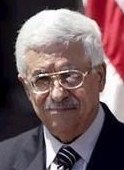 Mahmoud Abbas, a former Prime Minister of the Palestinian Authority, a chief negotiator of the Oslo accords, a strong opponent of the militarization of the Intifada, a competent and pragmatic individual has taken over as the Chairman of the PLO.
According to the charter of the PA, parliament speaker Rawhi Fattah has taken over as acting President of the Palestinian Authority. Fattah is a relative lightweight with no grass roots following and will serve essentially as a stopgap acting President (for 60 days by law) until the leadership issues are settled.
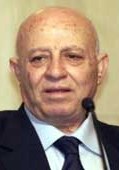 The other key individuals include Ahmed Qurei the current Prime Minister; an Arafat loyalist, who like Rawhi Fattah is not very popular. Saeb Erakat is a well-known face and name but does not have the muscle to carve out a position for himself. It is likely that all of them, Fattah, Erakat and Qurei, will defer to Mahmoud Abbas who is now the head of Fatah, the original group founded by Arafat and the PLO.
The most interesting and potentially problematic leader is the young, aggressive and well-connected Mohammed Dahlan. Dahlan was formerly Arafat’s security chief and national security advisor but was marginalized when he was perceived as challenging Arafat’s authority.
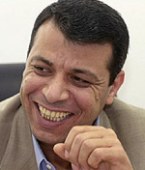 While he holds no post at the moment, he is in control of the security forces in Gaza and is easily the most powerful player in Gaza. He has links with Israel and the United States and there are those in the Central Intelligence Agency and in the Israeli military who will be happy to see him in charge of Gaza. Dahlan is capable of working with everyone, Fatah, Hamas, Israelis and Americans. He is the guy to watch.
Jibril Rajoub is another potential troublemaker. His biography is similar to Dahlan’s. Dahlan and Rajoub hate each other, are opportunist and have access to a lot of muscle and are capable of using Palestinian security forces in pursuit of personal goals. It is also possible that if Dahlan creates a problem in Gaza, Rajoub will solidify his own position in the West Bank by working closely with his former ally Mahmoud Abbas.
Potentially the most mercurial of individuals is Merwan Berghouti.
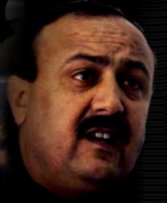
Since this article was published, Berghouti has declared his intentions to contest the elections for the Chairmanship of PA.
Berghouti is currently serving multiple life sentences in an Israeli prison. He was the leader of the militant organizations, Al Aqsa brigade and the Tanzim (part of Fatah). He has been a strong advocate of resistance, both violent and non-violent, to Israeli occupation. He is the most popular Palestinian leader today. There are many in Palestine who believe that he is the natural heir to the mantle of Arafat’s symbolic status as the representative of Palestinian aspirations. They also believe that his imprisonment could work in his favor and make him the Nelson Mandela of Palestine.
If set free, he is capable of perhaps even uniting the PLO and Hamas given his popular appeal. He will be a tough individual to negotiate with. However if Palestinians chose him, it may be like resurrecting Arafat and giving Israel and the United States another reason to stall negotiations. He may unite Palestinians but he may also preclude a resolution.
While Arafat’s death has opened a window of opportunity for significant progress on Middle East peace, a positive outcome depends on several key factors; the emergence of a credible leadership in Palestine without too much internecine fighting, the ability of Europe to push Washington to act and the willingness of the United States to push Israel to act, and the willingness of Arab nations to work in concert and constructively. It also depends on the tactics that Iran and the Islamic militias adopt if the peace negotiations do begin in earnest.
Yes, there are many ifs and buts, but now is the best time to overcome them. Procrastination by any and all parties could result in consequences far too devastating and for far too many.