


Previous Story
The Role of Social Scientists in Muslim Societies
Posted On May 21 2004
This article was published in the May 2004 issue of Islamic Horizon (USA).
It was previously published by Islam21(UK) and The Globalist.
The basis for happiness in this world and the next is Knowledge
(Plato, Al Farabi and Al Ghazali).
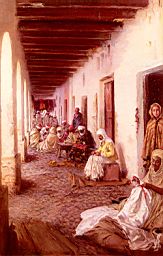 One of the most important objectives of Islam is to enable its followers to live an enlightened life. The Quran does not hide its preference for those who possess knowledge and those, whose faith is tempered by reason. Muslims correctly value those who have knowledge and Ulema have for centuries determined how Muslims understand Islam and the world. But over time Muslims have mistakenly began equating knowledge with a narrowly defined conception of religious knowledge, and scholars with again narrowly defined conception of scholarship. Thus ironically as the frontiers of knowledge expanded and human understanding of things and the scope of sciences expanded, — sometimes astronomically – the Muslim vision of what is knowledge and who is knowledgeable shrunk.
There is no doubt in my mind that the diminishing Muslim vision of knowledge and the knowledgeable is singularly responsible for the decline of creativity, dynamism, vitality and power of the Islamic civilization. Today, without doubt, the Muslim world lags behind all other civilizations in its production and consumption of knowledge. Today most Muslims think of knowledge as that limited to the familiarity with medieval Muslim understanding of law and jurisprudence. Scholars are only those who “memorize” Quran and the traditions and are familiar with pedagogical and epistemological tools developed a thousand years ago. It is therefore not surprising that under the intellectual leadership of this class of scholars the Ummah has gone from one low to another lower low.
One area of knowledge that has been deeply neglected by Muslims is the arena of social sciences. Except for the Islamization of Knowledge project and the American Journal of Islamic Social Sciences, both initiatives launched by American Muslims in early 1980s, there has been very little attempt by Muslims to indegenize social sciences. Social sciences, unlike Islamic sciences, which are essentially normative paradigms, have an empirical focus. Social sciences are more interested in understanding and describing the world as it is rather than on postulating on how it ought to be. Without being prejudicial about what is more important, we must realize that while medieval Islamic sciences do provide a view of how the world ought to be a thousand years ago they do not equip our jurist-scholars with the training and tools necessary to understand the world as it is. Ulema’s discourses on how the world ought to be become meaningless and therefore ineffective because they are not grounded in contemporary realities. Very simply, if you do not understand where you are, even if you know where you have to go, you will go no where.
Hence you need social sciences to understand where you are and put religious knowledge of where to go to effective use. To put it bluntly, without social sciences, traditional Islamic sciences are useless.
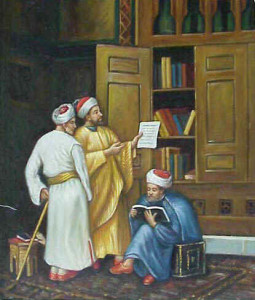 The Role of Social Scientists
The most important function that social scientists can perform is provide our leaders and the attentive public with an empirical understanding of our existential conditions. Without an accurate analysis of where we are effective remedial policies cannot be articulated. Social scientists provide the in depth analysis necessary for informed decision making.
The Quran in a beautiful passage praises those who reflect on the empirical realities of our world – contemplate the creation – in Surah Al Imran:
Verily in the creation of the heavens and the earth,
and the alternation of night and day – there are indeed signs
for men of understanding; Men who remember Allah,
standing, sitting, and lying down on their sides,
and contemplate the creation
of the heavens and the earth [Quran 3:190-191]
The Quran also exhorts Muslims to undertake empirical study in Surah Al Ankabut.
Say: Travel through the earth and see
how Allah originated creation [Quran 29:20].
Some countries such as Japan, India and China have developed indegenized social scientists who use advanced analytical and research skills in the interest of their nations and provide the necessary information to make effective policy. The progress and growth and development of these nations are indicative of the success of their social scientists. The Muslim world, which often looks to “the Ulema” to ask all questions such as is it halal to eat gummy bears or if one can one marry two sisters simultaneously, and is it ok to join the WTO and is democracy a good idea, remains strikingly underdeveloped. While the Ulema are “trained” to answer the first two questions, contemporary reality is outside their domain.
The success of non-Muslims and the failure of Muslims in worldly matters can be explained only through the knowledge deficit that plagues the Muslim community. The Quran once again is so clear on this issue:
Allah will raise up to (suitable) ranks (and degrees) those of you who believe and who have been granted knowledge. [Quran 58:11]
While I cannot comment on the faith of anyone, I can understand that Allah has raised the West and the Far East to great heights and honor purely because of their commitment to freedom of thought and knowledge. The best universities and the most productive work in knowledge accumulation is taking place in the West and the Far East. Actually everywhere except in the Muslim World.
Social scientists must not only be consulted but also encouraged to research, speak and write freely on the most important and pressing issues such as external and internal security, geopolitics, globalization, inter-faith politics, economics, social and public policy and short and long term planning. Other issues that they can enrich are normative discussions based on empirical experience of institutions and polities that are best suited for our times. Social sciences are now very diverse, very complex and very advanced. They deal with issues all across the board and their findings impact policy at all levels.
 The Ummah today does not need Ulema who are incapable of knowing the world we live in, but rather social scientist that are also familiar with the maqasid al Shariah — the divine way – to help develop and govern our societies efficiently and effectively.
Islamic sciences that were developed – remember they were developed by human beings not revealed by God – were quite advanced for their time and help vitalize the Islamic world and make it a dominant and thriving civilization. However they have enjoyed little development in over a thousand years. In Islamic Madrassahs syllabi have not been revised in over 200 years! All good social scientists revise their curriculum every time they teach their courses. While Islamic sciences have languished, social sciences have advanced. While the former remains a dead tradition the latter is alive and growing.
Social sciences have also added Islamic studies to their realm and have developed a more nuanced, more sophisticated and even empowering vision of Islam by critiquing and building upon traditional Islamic sciences. Today it is easy to find Muslim social and humanities scholars who are also trained in traditions methods, who now empowered by new epistemologies and are doing wonderful research that if the Ummah were to embrace would resuscitate the community.
 Today the knowledge to revive and develop the Islamic Ummah is available. It is time the community recognizes that the for centuries we have failed to become leaders of humanity and fulfill our mandate as Allah’s vicegerents on earth (Quran 2:30) is because we have surrendered our vision, our faith and our reason to deadwood. Power is a function of knowledge.
Say: Are those equal, those who know and those who do not know? [Quran 39:9]
The Ummah is powerless because those who they consider as knowledgeable have failed for over 500 years to provide us with an empowering vision.
American Muslims now live in times where the basic objectives and even values of the community are questioned. It is time American Muslim social scientists stepped up to the plate and addressed some of these issues. The community needs new vision and new direction. In academic journals and conferences Muslim social scientists have provided sophisticated analysis of our condition and also enlightening pathways for a better and more secure future for all. It is now up to the community leaders to connect the output of these scholars with the direction of the community.
Scholars by nature are isolationists. They need seclusion to think, research and write. It is not fair to expect them to come forward, some do like yours truly, but the community must also seek them and seek their guidance.
The future belongs to those who have thought the deepest about it.




AS SALAAM ,
I FULLY AGREE WITH YOUR VIEWS AND LIKE TO KNOW HOW TO PROPAGATE AND CONVEY THE CONCEPT TO THE MASSES .
I PERSONALLY HAVE BEEN DISCUSSING THESE ISSUES WITH BROAD RANGE OF PEOPLE BUT FIND THE MOST OF THEM EITHER MISUNDERSTAND OR DO NOT HAVE ANY CONCEPT OF SOCIAL SCIENCES RELATED TO ISLAM ,
SHAHID MANZAR
Thank you for your comments. Best way to share these views is to post my articles and links to them on social media. Thanks