Previous Story
Are Pakistanis Less Prejudiced than Indians?
Posted On Mar 29 2005
Comment: 0
I was disappointed to read that when Pakistan beat India in a Cricket match this week in Bangalore they were rewarded with silence by thousands of cricket fans in the stadium. In contrast when India beat Pakistan in Karachi the crowds there roared with approval for the Indian team’s excellent performance. One recurrent theme of India ’s tour to Pakistan was the great welcome they received, the hospitality of the locals and the general love and adulation that Indian team received in Pakistan across the board. The silence in Bangalore in contrast seemed shameful.
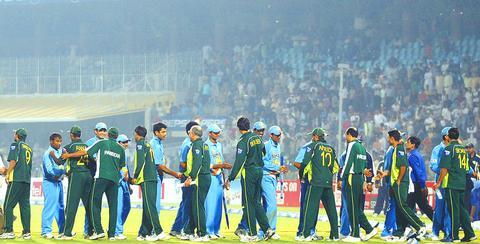
India is a democracy and given its long history of religious pluralism it is a surprise that when it comes to respecting the other for its excellence India, at least Bangalore, is found less than equal to Pakistan. I do not wish to make too much out of this singular event, the poor Bangaloreans were already stupefied by the declining batting prowess of the Indian captain Ganguly [who aggregated 48 in his last 5 innings], but I think that the silence in Bangalore is indicative of how nationalism undermines good nature, in this case sportsmanship.
An Indian visitor to Pakistan last year wrote [Business Line April 05, 2004]:
“It was an overwhelming experience at Karachi ‘s National Stadium where the Pakistanis were throwing chocolates at the Indian fans cheering their team. Quite a few were carrying the flags of both countries imaginatively stitched together. The guy on the street selling bhuttas refused to accept money from us and so did some restaurant owners saying that we were their guests!”
She was amazed by people on the streets wanting to shake the hands of Indian visitors and “asking us to come home for dinner. Everybody we met had some relative staying in India. Star Plus is Karachi’s most favorite channel. Shops gave us 40 to 50 per cent discount and again it was the India factor. Taxis, autos, army guys… the list is endless… everywhere we got loads of courtesy and respect; more than we would get in our own country. It is really sad that we consider ourselves `secular’ and yet have such a negative perception of Pakistan.”
An article in The Telegraph [March 06, 2005] reported:
Almost each of the 8,000 Indians who went to Pakistan for the 2004 cricket series had a story to tell — of a shop-keeper who wouldn’t take money, a taxi-driver who refused the fare and the perfect stranger who called them home for dinner.

The stories about Pakistani hospitality to the Indian cricket team and the thousands of Indian fans proliferated in the media last year. I hardly see any such reports this time. I hope many Pakistani tourists too will go back with similar appreciation of Indian hospitality.
Even as the series began Indian media was observing that Pakistanis would not be received with the same sentiments as Indians were in Pakistan. Sen and Mahapatra write in The Telegraph, that according to Ali, a restaurant owner in Calcutta, Pakistanis would not be received with the same fervor because Indians lacked the heart and guts to do so [“Kaleja nahin hai” he said]
How should we understand this disparity in the conduct of Pakistanis towards Indians and of Indians towards Pakistanis? Are Pakistanis less prejudiced than Indians or are they more capable of rising above hatred and mutual distrust? Does this comparison suggest that the Wahhabi teachings supposedly so widespread in Pakistan are no match to the Hindutva capacity to sow hatred among Indians.
Pakistanis who live in a supposedly non-secular, non-democratic society do not fear to show that they are fans of Indian cricket as well as Indian hockey teams and Indian movie stars. But apparently in secular and democratic India, to show appreciation for Pakistan is a potential act of treason, one could be labeled a spy!
Amin, a Kashmiri exporter settled in Calcutta says: “There’s no such thing as a Pakistani fan. All Pakistani fans are spies,”.
It is a shame that in the new, more confident, more successful India, nationalism and communalism are depriving people of basic values such as hospitality often associated strongly with Indian culture. In recent years Indian nationalism has used the portrayal of Pakistan as the enemy as a way to explain many Indian problems and to provide a justification and cover for the rising Hindutva movement and its egregious anti-Muslim politics. Indian movies, the electoral discourses, media are proliferated with articles about Pakistan’s hand behind everything from Godhra to Kashmir. This culture of blaming Pakistan for all of India’s problems and the deep seated hatred and intolerance which often does not distinguish between Pakistanis and Indian Muslims may one day cause a terrible holocaust in India which will make the genocide in Gujarat 2002 look like a picnic.