Previous Story
American Muslims and the Rediscovery of America’s Sacred Ground
Posted On Dec 28 2005
Comment: 0
 The American Muslim community is at a crucial crossroads. It is experiencing an existential crisis. Students of Islam in the West are beginning to ask questions about the future of Islam, and Muslims in an increasingly Islamophobic West are growing wary of the unrest and growing tide of extremism in the Muslim world. At the same time, American Muslims have reached a critical mass. This gives them a presence that promises influence in the mainstream society, and a visibility that also attracts a backlash, as people fear its growth and influence. Some scholars, such as Fawaz Gerges, maintain that the contemporary Arab and Muslim experience is similar to that of communities such as American Jews and Irish Americans, who too were assimilated only after being discriminated against, marginalized, and oppressed.2 The difference is that the catastrophic events of September 11, 2001, and the open-ended “war on terror” has exaggerated and traumatized further the potential for Muslims to become fully participating members in the greater American society.
The determination of the American Muslim community to make an impact on the political, theological, and cultural scene on North America, and the growing fear and prejudice against Islam and Muslims in the United States, has created a unique situation for Muslims. Unlike Protestants, Catholics, Jews, Mormons, and others, American Muslims do not yet have a place in American society.
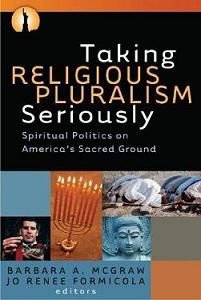
This is a chapter from a new book on religious pluralism in America. It explores how the American Muslim community has negotiated the idea of pluralism and America’s public sphere while mainstreaming Islam.