


Previous Story
Prophet Muhammad’s Promise to Christians
Posted On Aug 22 2010
This article was published in the Pittsburg Post-Gazette [03.25.2007], Daily News Egypt [03.09.2007], AltMuslim [03.03.2007], Pakistan Link, Middle East Window, Turkish Daily News [04.10.2007 ], OpEd news [03.19.2007],Ikhwanweb [02.11.07], and many other places.
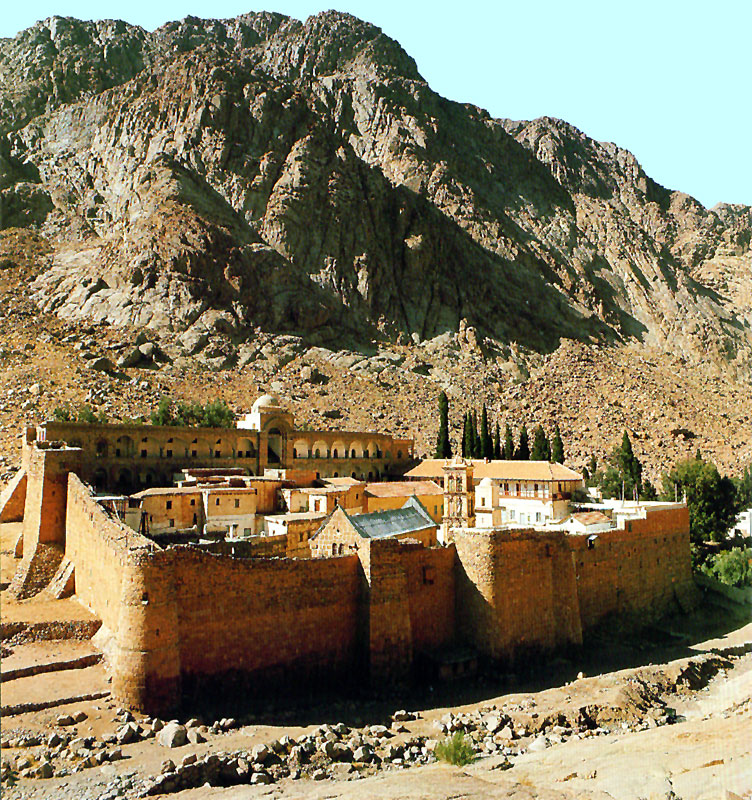
St. Catherine’s Monastery, Sinai, Egypt
Muslims and Christians together constitute over fifty percent of the world and if they lived in peace, we will be half way to world peace. One small step that we can take towards fostering Muslim-Christian harmony is to tell and retell positive stories and abstain from mutual demonization. In this article I propose to remind both Muslims and Christians about a promise that Prophet Muhammed (pbuh) made to Christians. The knowledge of this promise can have enormous impact on Muslim conduct towards Christians. Muslims generally respect the precedent of their Prophet and try to practice it in their lives.
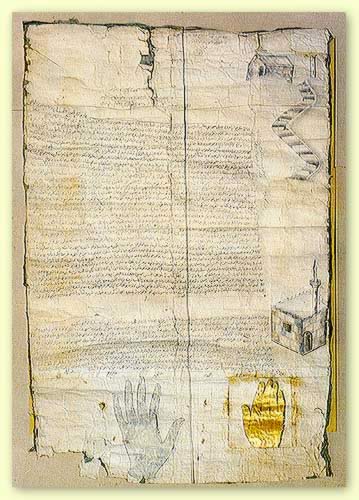
A Picture of Prophet Muhammad’s Letter to St. Catherine’s Monastery
In 628 AD, a delegation from St. Catherine’s Monastery came to Prophet Muhammed and requested his protection. He responded by granting them a charter of rights, which I reproduce below in its entirety. St. Catherine’s Monastery is located at the foot of Mt. Sinai and is the world’s oldest monastery. It possess a huge collection of Christian manuscripts, second only to the Vatican, and is a world heritage site. It also boasts the oldest collection of Christian icons. It is a treasure house of Christian history that has remained safe for 1400 years under Muslim protection.
The Promise to St. Catherine: “This is a message from Muhammad ibn Abdullah, as a covenant to those who adopt Christianity, near and far, we are with them. Verily I, the servants, the helpers, and my followers defend them, because Christians are my citizens; and by Allah! I hold out against anything that displeases them. No compulsion is to be on them. Neither are their judges to be removed from their jobs nor their monks from their monasteries. No one is to destroy a house of their religion, to damage it, or to carry anything from it to the Muslims’ houses. Should anyone take any of these, he would spoil God’s covenant and disobey His Prophet. Verily, they are my allies and have my secure charter against all that they hate. No one is to force them to travel or to oblige them to fight. The Muslims are to fight for them. If a female Christian is married to a Muslim, it is not to take place without her approval. She is not to be prevented from visiting her church to pray. Their churches are to be respected. They are neither to be prevented from repairing them nor the sacredness of their covenants. No one of the nation (Muslims) is to disobey the covenant till the Last Day (end of the world).”
No compulsion is to be on them. Neither are their judges to be removed from their jobs nor their monks from their monasteries. No one is to destroy a house of their religion, to damage it, or to carry anything from it to the Muslims’ houses. Should anyone take any of these, he would spoil God’s covenant and disobey His Prophet. Verily, they are my allies and have my secure charter against all that they hate. No one is to force them to travel or to oblige them to fight. The Muslims are to fight for them. If a female Christian is married to a Muslim, it is not to take place without her approval. She is not to be prevented from visiting her church to pray. Their churches are to be respected. They are neither to be prevented from repairing them nor the sacredness of their covenants. No one of the nation (Muslims) is to disobey the covenant till the Last Day (end of the world).”
The first and the final sentence of the charter are critical. They make the promise eternal and universal. Muhammed asserts that Muslims are with Christians near and far straight away rejecting any future attempts to limit the promise to St. Catherine alone. By ordering Muslims to obey it until the Day of Judgment the charter again undermines any future attempts to revoke the privileges. These rights are inalienable. Muhammed declared Christians, all of them, as his allies and he equated ill treatment of Christians with violating God’s covenant.
A remarkable aspect of the charter is that it imposes no conditions on Christians for enjoying its privileges. It is enough that they are Christians. They are not required to alter their beliefs, they do not have to make any payments and they do not have any obligations. This is a charter of rights without any duties! The document is not a modern human rights treaty but even thought it was penned in 628 A.D. it clearly protects the right to property, freedom of religion, freedom of work, and security of the person. I know most readers, must be thinking so what? Well the answer is simple. Those who seek to foster discord among Muslims and Christians focus on issues that divide and emphasize areas of conflict. But when resources such as Muhammad’s promise to Christians is invoked and highlighted it builds bridges. It inspires Muslims to rise above communal intolerance and engenders good will in Christians who might be nursing fear of Islam or Muslims. When I look at Islamic sources, I find in them unprecedented examples of religious tolerance and inclusiveness. They make me want to become a better person. I think the capacity to seek good and do good inheres in all of us. When we subdue this predisposition towards the good, we deny our fundamental humanity. In this holiday season, I hope all of us can find time to look for something positive and worthy of appreciation in the values, cultures and histories of other peoples.
Article available in: French, Indonesian, Arabic, Urdu




I hope I can be a better person in terms of religious
tolerance and otherwise.
As a Catholic, I applaud your bringing this document to our attention. This is a message that should be shouted from the housetops (or the church spires). I work for a Muslim organization and was aware of this document, but your exegesis of it is very helpful. I’ll try to bring it to the attention of Christian friends.
This is educative and interesting article. It is a good thing to know that prophet Mohammed(pbuh) had respect for the Christians and also had a treaty with the Christians, but why do the Muslims don’t obey and respect this treaty? May God have mercy on us all.
SubhanAllah there are many such examples of how Muslims have treated people of other faiths. It is a shame that these stories are not shared by Muslims with their non-Muslim friends, nor do the non-Muslims talk about them.
Media likes to project negative aspects of Islam, blowing them out of proportion.
The stories that we read in the history of Islam, all have a background that needs to be understood, otherwise there is no difference between Muslims and others who take things out of context.
Regards
Kaaaaaash….. v should study our prophet SAW Seerat completly..v can volve our issues in seerah presume both of intra faith issues or inter faith issues..
Very great post and thank you for this, I keep in mind to be always remembered that Islam is the religion of peace.
Islam a peaceful religion created by God
This is a charter of rights without any duties! The document is not a modern human rights treaty but even thought it was penned in 628 A.D. it clearly protects the right to property, freedom of religion, freedom of work, and security of the person.